Entry 4: Bamboo
I've been thinking about bamboo.
How it grows in sections. Node after node. How those small interruptions along the stem aren't interruptions at all, but part of the structure that allows the plant to keep reaching upward.
Maybe becoming an artist works something like that.
This month in the Making The Artivist® Apprentice Program, we spent a lot of time writing: bios, artist statements, CVs, and drafts for the upcoming DCASE Individual Artists Program grant.
These are the things no one really tells you are part of being an artist.
I remember taking a class at Columbia College that was supposed to teach some of this, but I don't remember leaving with any real understanding of what these documents were supposed to look or sound like. I don't remember anyone showing us examples and saying: this is what this thing can do.
Hell, I don't even know what I wrote back then.
It must not have been very good because I didn't keep it.
That's another thing I wish someone had told me.
Keep everything.
The artist statement you hate. The first grant you didn't get. The journal. The drawing. The to-do list. The abandoned idea. The paragraph that doesn't sound like you anymore.
Keep some record of the artist you were because one day you might need to see how far that artist traveled.
At 43, I am still revising the language I use to describe myself.
It wasn't until recently that I arrived at an artist statement that feels like it can hold the different parts of my practice together: Black life, queer embodiment, intimacy, memory, collective care, performance, writing, teaching, and cultural exchange. And somewhere inside all of that, I found the Japanese word Jison (慈尊)--a reverence for compassion held between bodies.
That language didn't exist for me when I was in undergraduate school.
I couldn't have written this artist statement then because I hadn't lived enough of the practice yet.
Maybe that's the thing I want the apprentices to understand.
An artist statement isn't a final declaration of who you are.
It's a record of who you've become able to recognize yourself as, for now.
And each of them is trying to recognize something different.
With Angeline, I found myself asking what she wanted someone to remember after reading her bio. Her drafts told me where she'd trained and lived, but I wanted more of her. I kept thinking about the personality in her shorter bio: "trees, clouds, and wild bunnies," dancing with her eyes closed. Those details didn't make her less professional. They made me remember her.
With Ash, the question became specificity.
If capitalism, identity, and systems of governance live inside the work, where exactly do they touch the body? If you are going to tell me about being a shapeless cog inside a capitalist system, let me feel the machine. What makes it difficult to be yourself inside it? What policies, structures, expectations are shaping the body? And what are you asking us to do after we've witnessed it?
The work wasn't simply to make their writing sound better.
It was to help them recognize themselves on the page.
I remember when I began applying for grants more frequently for my own practice. I applied for CAAP, now DCASE IAP.
And I didn't get them.
Then, randomly, I came across a successful DCASE grant sample.
I read it.
Then I read it again.
Oh.
This is what they're asking me to do.
Something clicked.
I wish someone had shown me that sooner. I wish I'd had artists a little further along who could show me the ropes of this strange administrative part of being an artist.
Then again, I can't express how valuable it became for me to learn how to do it myself: the writing, the budgets, the constant translation of something embodied and intuitive into language a stranger can understand.
I want the apprentices to have both.
Someone who can show them the ropes.
And enough room to learn how to tie the knots themselves.
Because there is something beautiful that happens when the writing starts to work.
You stop seeing an application.
You see yourself on the page.
And maybe the page becomes another piece of art.
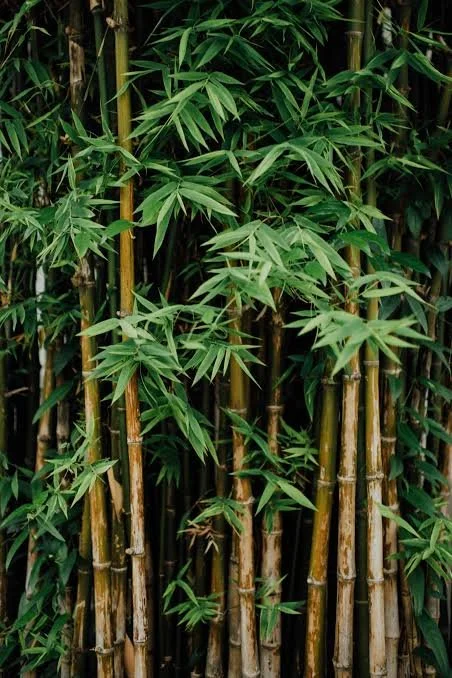
Field Note: The places where growth pauses are also part of the growth.
Alongside all this writing, Rahila and I have been giving the apprentices more time inside their choreographic practices as they work toward 8-12 minute solos.
And that has brought up another question for me.
What does it mean to actually be in process?
Sometimes I look around the studio and see a lot of talking. Long stretches on Instagram or other social media. Waiting for inspiration to announce itself.
And I understand it.
Making a solo is fucking hard.
I haven't made a self-choreographed solo in a long time. I'm supposed to make one for the end of The Righteous Beauty of the Things Never Accounted For, whenever I find the funding to return to it. Maybe I'll find myself making a cameo in Black Apologia.
So when I feel and see Skylar's uncertainty, I understand.
When I see Autumn searching for inspiration, or maybe dealing with inspiration overload, I understand that too.
But I also want them to discover that process isn't necessarily something that arrives.
Sometimes you have to make yourself available to it.
Move.
Write.
Research.
Try something.
Throw it away.
Try something else.
Write down what happened.
Then let what happened tell you what to do next.
I've watched some of that happen with Donna. Her investigation of rest has continued evolving, moving toward questions of hostile architecture. That shift opens another door. I mention the performance artist Dana Michel. Maybe that reference leads somewhere. Maybe something she encounters there comes back into the body differently.
That's process.
Writing informs dancing.
Dancing informs research.
Research sends you back to writing.
The thing you thought you were making becomes something else because you stayed with it long enough to notice.
Node after node.
Maybe that's what I'm noticing about this month.
We're often taught to recognize artistic growth through the visible things: the finished solo, the polished artist statement, the beautiful bio, the funded grant, the performance.
But bamboo needs its nodes.
The places where one section ends and another begins.
The CV will change.
The bio will change.
The artist statement will change.
The solo will change.
The artist will change.
There will be versions of ourselves we don't recognize anymore.
Keep them anyway.
There will be drafts that embarrass us.
Keep those too.
There will be moments when we don't know what we're doing.
Move anyway.
Write anyway.
Pay attention anyway.
The point isn't to arrive at a version of yourself that never needs revision.
Maybe the practice is learning to build enough structure that you can keep growing through it.