At the beginning of March, I started as a facilitator for Red Clay Dance Company's Making The Artivist® Apprenticeship Program, a training program for 18–24-year-old budding dancemakers and artivists. When I saw the call, I knew I wanted to be part of it.
I wished I had something like this after leaving Columbia College, returning quie later.
A space where I could have discovered sooner how creating work centered on Black and Brown men, intimacy, vulnerability, and community could deepen my artistic practice. A space that encouraged me to ask what I had to say about the world and how I might say it. A space where I could learn to be an eye, an ear, a supporter, a dramaturg, a witness, and a collaborator for my peers.
It felt like the right next move.
At the beginning of June, I asked my co-facilitator, Rahila Coats, for a few reflections on our first month together. She spoke about how each apprentice artist was moving on their own time while somehow remaining together in time. At first, I thought about clouds: their cycles of forming, dissolving, reforming, and becoming something else.
But what stayed with me was when Rahila said the month felt like cactuses.
How they protect and retain their interiors.
How they take in nutrients.
How they sustain themselves.
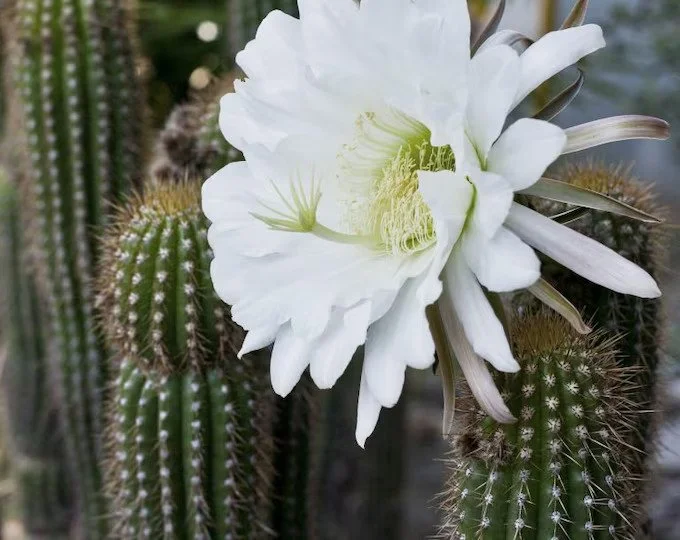
Field Note: Even cactuses bloom.
June brings summer.
How do we survive the summer?
Maybe the question isn't survival alone.
Maybe it's the intelligence of survival.
How something learns to protect itself without giving up its ability to live.
I think about Kadarie's heart motif and how it seems to slip away while never actually leaving. I think about India looking into the mirror of her hands and knowing it was more than a reflection; it was a reminder, a dream, a possibility. I think about Angel wanting to become an angel for her father.
Throughout the month, we circled questions around identity, vulnerability, performance, rest, gender, mental health, beauty, interiority, and what it means to remain soft in systems that reward hardness.
Again and again, I found myself thinking about how many of us have learned to store emotional water deep inside ourselves. These private reservoirs. These water worlds. The ways we learn to hold what we need while forgetting the air we need too.
A cactus survives by retention.
By adaptation.
By learning how to sustain itself in difficult climates.
Many artists do the same.
Throughout our conversations and embodiment practices, we returned often to the idea of protection: the masks we inherit, the performances we perfect, the expectations placed on Black bodies, queer bodies, femme bodies, masculine bodies. We talked about emotional restriction, rest as resistance, the male gaze, shapeshifting, and the complicated question of what it means to know yourself.
And yet, despite all of that, there was joy.
The Dolphin Training game that took Angeline a while to solve.
Skylar laughing at herself after describing something as "fierce-a-licious."
The recurring appearance of "Leave Men in the Box" interrupting presentations before and after work centered on men.
The surprising moments when movement and choreography suddenly aligned out of nowhere.
Not loud joy.
Not forced joy.
But recognition.
Moments where someone said something honest enough to shift the room.
Like Angel’s solo about ICE, her father, and borders. Her being an angel.
Or the silence that arrives when real life takes over and a young artist can no longer be present in the room.
One image continues to stay with Rahila and I: the cactus.
Protecting and retaining its interior while still taking in nutrients and sustaining life.
That feels deeply connected to the work of becoming an artivist.
How do we remain porous enough to grow while also protecting ourselves from exhaustion, spectacle, and erasure?
Maybe this month was less about arriving at answers and more about noticing the environments we've adapted ourselves to survive.
Maybe noticing is its own kind of practice.
Its own kind of bloom.
What flower will they become next?
What flower will we become next?